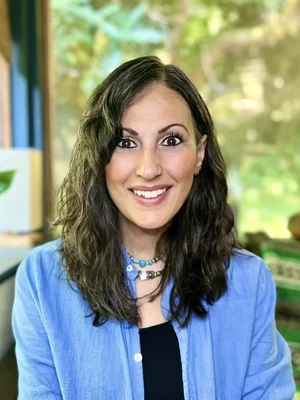
Why Supporting XX-XY Athletics Is Personal
Believing that women’s biology is crucial and fundamental to their livelihood and safety should not be a controversial issue. And yet, in 2026, it is one of the hot-button topics, despite what women have fought for, gone through, and achieved over the last 100 years. If our grandmothers, mothers, and sisters of the suffragette movement could see what we are fighting for today, they would be both enraged and mortified. In fact, I think they would be heartbroken, not only by what is happening, but by how many women themselves have become willing participants in it. Why did generations of women fight so hard to gain independence from systems that kept them under male rule and male control, only for women to find themselves once again expected to yield to men, and, perhaps most astonishingly, with the support and insistence of other women?
I stand in a unique position, having grown up in a part of the world where female oppression is deeply embedded both culturally and religiously. I also occupy a controversial position politically. I came to the United States as an escapee and hopeful immigrant because I wanted to live under the promise of absolute freedom: freedom of speech, of expression, of religion, and above all, intellectual freedom.
The United States did not disappoint when I arrived in the late 1990s. I was able to live as an openly liberal ex-Muslim woman and defend the identities I saw as marginalized and oppressed. I always understood women to be among the most historically and globally marginalized people. Racial and ethnic oppression is equally deserving of recognition and attention, but it often takes shape within particular geographic, cultural, and historical contexts. The oppression of women crosses all of those boundaries. Women exist within every race, ethnicity, religion, culture, and country, and sex-based discrimination can follow them through all of them. Being a woman is not geographical. It is not racial, ethnic, cultural, or aesthetic. It is a reality rooted in sex, and it exists everywhere in the world.
I have always believed in giving every person the respect and humanity they deserve to live the life they choose for themselves, as long as they don’t hurt others. I still believe this. I also believe that one person’s beliefs, whatever they may be, should not override a structured system when interacting with society at large. That is entitlement, and men have done this for centuries.
Change is inevitable in any civilization, but some things have remained true throughout recorded history. Even with divergences, anomalies, and exceptions, some things are not up for debate. The sun rises in the east and sets in the west; we observe it without questioning its reality. Children should never be abused or harmed. Murder and rape are unequivocally rejected in democratic societies. And the existence of two biological sexes, organized around the production of two types of reproductive cells, is a scientific reality. These realities do not depend on how we feel about them.
Recognizing reality does not prevent us from treating living beings with dignity. Animals are living beings that should be treated humanely, but often are not. Women are more than half of the human population, and their place in society should reflect that, but it does not. I find it curious that globally we have still not reached a consensus that animals and women should be treated with more dignity.
Animals cannot speak or advocate for themselves. Women can, except in the many places where they are still denied that freedom. What I struggle to understand is what happens where women do have a voice. Some willingly relinquish it, completely convinced they are standing on the side of progress, while silencing other women who dare to disagree. Perhaps part of the answer lies in something women have been encouraged to do for generations: empathize, nurture, accommodate, and put the needs and feelings of others before their own. These can be beautiful qualities, but they can also be exploited. Women have spent generations fighting against the expectation that our comfort, boundaries, and safety should come second to those of men. And yet I sometimes wonder whether that same instinct to accommodate is being called upon again, this time in the language of compassion and inclusion. At what point does empathy for others require women to set aside their own needs, or those of other women?
Others see the contradictions and feel the discomfort, but silence themselves out of fear: fear of being judged, labeled, rejected, or cast out. We fought so hard for women to have a voice. What good is that freedom if we become afraid to use it?
And none of this means that biological reality should dictate how people dress, behave, or live their lives. Absolutely not. Everyone should be free to make those personal choices without legal or even social scrutiny. But taking such hard-earned freedoms to mean the erasure of scientific fact is deeply problematic. We see this even in some areas of science and research, where the line between new evidence and new interpretation can become increasingly blurred. New evidence should absolutely challenge old assumptions—that is how knowledge evolves. But revisiting the past because we have learned something new is very different from reshaping it to accommodate how we want to understand ourselves today.
So how have we gone from questioning rigid rules, to freeing women from patriarchal harm, to doubting biology and accusing anyone seeking an honest conversation about it of being a bigot or a hater?
This brings me to the point of this essay.
I have made peace with the fact that speaking honestly will not always earn me a place in the crowd. I have lived much of my life as an outcast from a society, culture, group, community, religion, and even family. I don’t stand on any issue exclusively devout and loyal to one side. I never will. So I will always be damned if I do and damned if I don’t.
Perhaps that is why being unapologetically honest and authentic comes with a familiar price. I know the consequences and ramifications; I’ve had lots of practice. I don’t do this to spite anyone. Quite the contrary. I do it to set an example that we can confront opposing views respectfully and assertively. I crave healthy debate and intelligent conversation. I crave intellectual honesty and earnest consideration. I crave courage and integrity instead of blind loyalty.
Why should I be shamed and shunned for sharing my views, for speaking up, for working in this field, for wearing a brand that I respect and believe in within a society where other communities are empowered to hang flags, wear buttons, and express themselves fearlessly? Isn’t there room for everyone in a system that claims to celebrate diversity? Has the meaning of “diversity” now also changed to mean “selective”?
XX-XY Athletics is a woman-owned, female-fueled, high-quality, and fashionably appealing brand. It believes in safeguarding women’s sports and uplifting female athletes. Jennifer Sey, the founder and CEO of XX-XY Athletics, is a former U.S. national champion gymnast, former Levi’s executive, mother, author, Emmy-winning producer for Athlete A, and advocate for women’s sports. By all measures, she is the epitome of female success, the manifested dream of the suffragettes, and just fifteen years ago she would have been the sweetheart of progressives and feminists. Alas, while those who oppose her are often celebrated for speaking boldly about what they believe, she has been vilified for doing precisely the same in defense of women and female athletes. It is remarkably easy to label, accuse, cancel, and attack the few voices willing to challenge a movement that increasingly leaves little room for questions, doubts, or dissent.
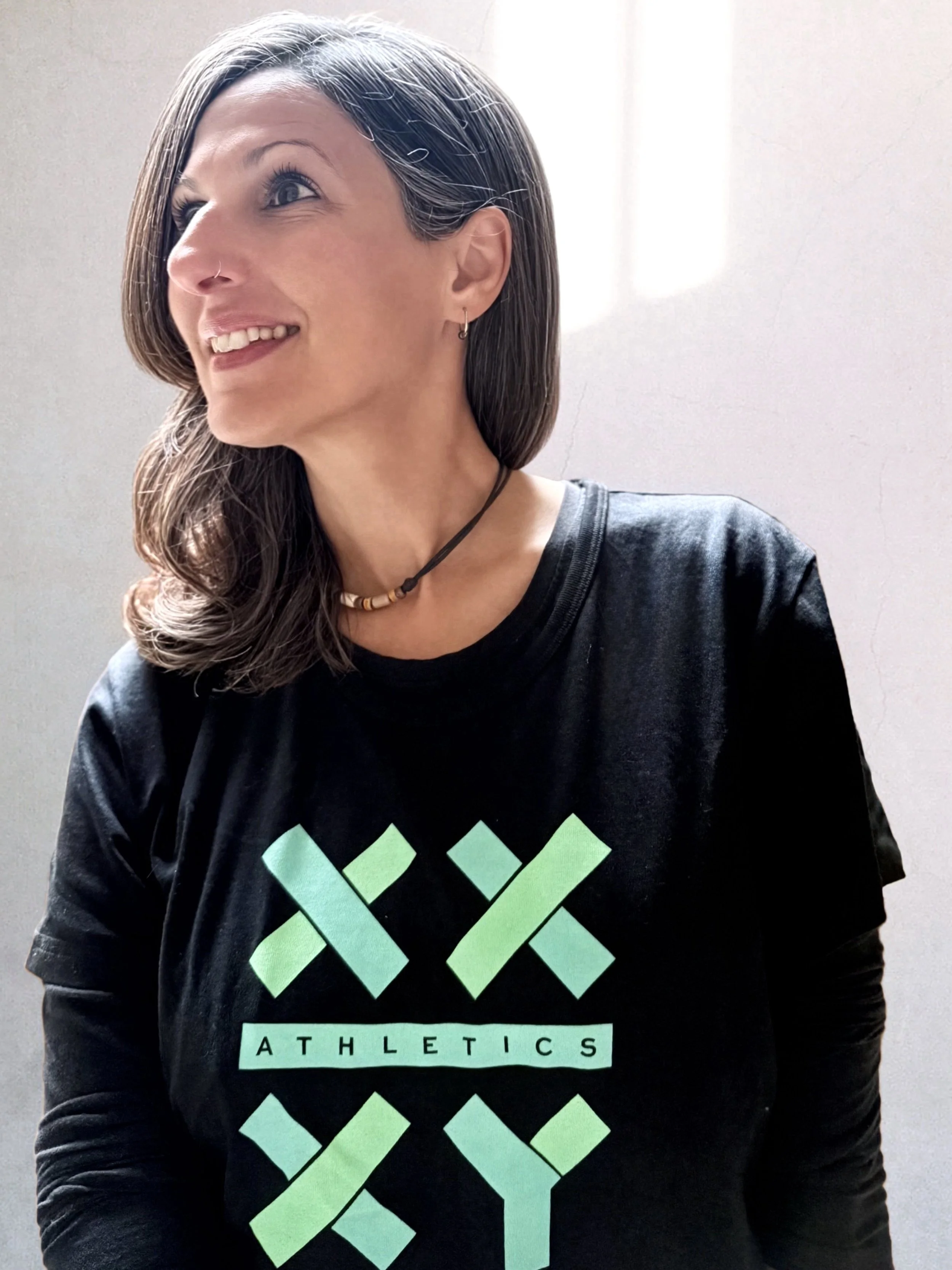
My support for XX-XY Athletics is therefore about more than liking a brand or wearing its clothes. I support what it represents: the willingness to say something plainly when saying it plainly has become uncomfortable, controversial, even scary. There is something powerful to me about a company built around celebrating female athletes while refusing to treat the biological reality of being female as offensive or exclusionary. Women’s sports exist because sex matters in athletics. Recognizing that does not require cruelty toward anyone else, nor does it require denying anyone the freedom to live and express themselves as they choose.
That is why wearing XX-XY feels personal to me. It represents something I have spent much of my life fighting for: the freedom to speak honestly, to question prevailing ideas, and to stand by a conviction without being forced into hostility toward people who disagree. I can respect the dignity of all people, including transgender people, while also believing that women and girls deserve protections, opportunities, and spaces based on sex. I don’t believe those principles have to cancel each other out.
And perhaps what frustrates me most is how many serious issues facing women remain unresolved while we are consumed with debating the very definition of a woman, something that, until remarkably recently, was never in doubt. Around the world, women are still fighting for basic freedoms, access to education, and economic independence. They are raped, trafficked, forced into marriages, subjected to domestic violence, and killed by intimate partners. Women still face female genital mutilation, sexual exploitation, reproductive coercion, and restrictions on their movement and autonomy. Even in developed countries, women continue to confront medical neglect, inadequate research into female-specific health conditions, maternal mortality, workplace discrimination, sexual harassment, and violence in many institutions. There is so much unfinished work. There are women whose most fundamental rights, safety, and dignity remain unprotected. And yet here we are, spending enormous cultural and political energy arguing over the never-doubted and long-established reality of what a woman is.
I wake up every day wondering if I am in The Truman Show. I cannot believe that this is the social fight of our time.
I could never have imagined that in my fifties—after reaching puberty at the age of ten, after my body carried, birthed, and nursed my sons; after facing the scare of breast cancer; after living daily with the challenges of menopause—I would be confronted over the most basic part of being a woman: my biology.
Not after all the battles I faced from childhood: being forced to cover my face before I turned eleven; having few educational or professional aspirations available to me in a country with rigid rules for women; being unable to travel or work without the permission of a male guardian; and enduring the many other religious and cultural obligations placed on me simply for being born female.
Yet today, my womanhood is scrutinized because I believe women deserve safe and private spaces that exclude biological males. My integrity as a person is questioned because I have chosen to speak up, even as I strive to do so respectfully and without hostility. The result, more often than not, is social isolation and cruel judgment.
I believe womanhood is not an identity one claims, despite the desire of any person to express themselves and live as they please, and they should be allowed to. There is still a hard-line distinction, in my firmly held belief, between women—not cis women, not biological women, simply women/females—and trans women.
And this is ultimately why my support for XX-XY Athletics is personal. Wearing the brand is not about hostility toward anyone, nor is it about denying anyone the freedom to live as they choose. For me, it is a visible expression of something I believe deeply: that women should not have to hide, or surrender the language, boundaries and protections associated with being female in order to demonstrate compassion for others. I am proud to be a woman, but today, saying so openly and wearing something that celebrates being female can somehow be interpreted as hate speech. I can respect another person’s humanity without abandoning my own convictions, and I can support the freedom of others without relinquishing the right to speak honestly about what I believe.
I was an ally and supporter of all gender-fluid expressions, and in many ways I still am, not because I was a tomboy or defy gender stereotypes, because girls can be masculine and boys can be feminine in healthy and sound ways. But I paused and reassessed when I began seeing signs of ideological conformity, something I recognized from my own upbringing and my education and career. When I was told to repeat the mantra without question, “Trans women ARE women,” something in me immediately recognized the demand for unquestioning conformity. It was hauntingly familiar, the same discomfort and alarm I had felt under the religious indoctrination of my childhood, when I was taught, without question, that “women, by law, are half the value of a man.”